Cabin pressure: the turbulent history of flight attendants - The Verge
Cabin pressure: the turbulent history of flight attendants - The Verge |
- Cabin pressure: the turbulent history of flight attendants - The Verge
- Winter Storm Washes Away Sand At Rockaway Beach - Yahoo News
- Wanted Miami Beach Shooting Suspect Had Been Arrested In NY - Yahoo News
- Florida Gov. Ron DeSantis announces new COVID-19 vaccination site in Pahokee - Yahoo News
- Spoiler alert! Upcoming TV soap storylines - Yahoo Lifestyle UK
| Cabin pressure: the turbulent history of flight attendants - The Verge Posted: 03 Feb 2021 07:00 AM PST Tracy* kept it together when her mom died in mid-March in New York. She kept it together when she came back from the funeral on an Amtrak rather than an airplane because there were no flights operating to get her home. It wasn't until she went back to her job as a flight attendant and saw out of the galley window row upon row of airplanes stacked nose to tail with cloth covers over their engines and sensors. Tracy has been flying for over 16 years. She worked during the Great Recession, when passenger traffic fell by 10 percent and forced several airlines to declare bankruptcy. She worked during the years of nightmarish tarmac delays prior to 2010, when airlines weren't required to taxi back to the gate to let passengers off even after delays of three or more hours. And she worked during the SARS epidemic in 2004, H1N1 in 2009, and the Ebola scare in 2014. But nothing in her training or her experience prepared her for the sight of so many airplanes from so many airlines with nowhere to go and no passengers to fly. For the first time in her entire career, she broke down and cried while on the job. This has to be the beginning of the end, she thought. How are we going to recover from this?  Two months earlier, in January 2020, the outlook for the year was bright. Airlines had just posted their seventh consecutive year of multibillion-dollar profits and were expected to continue doing just as well. For an industry historically defined by cycles of boom and bust, there seemed to be no storm clouds on the horizon — the economy was good, gas prices were stable, and business travel was expected to grow to a record $1.6 trillion for the full year. But then the bottom fell out of commercial aviation. On March 1st, nearly 2.3 million passengers took a flight somewhere in the United States. Just 30 days later, that number was just over 136,000, a 94 percent drop against the previous year. And the number would keep falling. Airlines were pushed to the brink. Delta burned through $60 million in cash a day; American Airlines, $70 million; and United, $100 million. In April, Congress passed the CARES Act, which included $25 billion in loans and grants to keep payrolls full and airlines out of bankruptcy, but even that was only enough to keep the industry afloat for six months. In October, with the COVID-19 pandemic showing no signs of abatement and Congress failing to pass an extension to the CARES Act, airline executives switched to plan B. They stopped service to smaller airports and retired entire fleets of aircraft. They took on a collective $67 billion in new debt — including some creative new strategies, like mortgaging their frequent flyer programs. But most of all, they tried to scratch what revenue they could out of the few people willing to travel. And there was no guarantee these drastic measures would work. "We've got 12 to 15 months of pain, sacrifice, and difficulty ahead," said Scott Kirby, CEO of United Airlines, in mid-October. And the nation's flight attendants would have to bear more pain, sacrifice, and difficulty than most.  On March 17th, the Department of Homeland Security designated airlines as "critical infrastructure" and flight attendants as "essential workers." This wasn't an honorific: in the DHS's own words, essential workers "have a special responsibility to maintain your work schedule" and ensure "continuity of functions." And as flight attendants went back to work, they found that they were not returning to friendly skies. Just as the pandemic changed everything else about travel, it's also turned their chief role — as the face of the airline from takeoff to landing — from a source of pride into a source of dread. Within weeks, several hundred flight attendants tested positive for COVID-19. By the end of April, it had claimed the lives of five. "Once it started going like wildfire, there was a lot of fear within the flight attendant community," recalled Lori Lochelt, who flew for 22 years. "There was so much unknown about the virus. Could it live on metal surfaces, the seat back pockets, the tray tables?" Despite this, most major airlines were rumored to actively prohibit flight attendants from wearing masks while on-duty, although only American Airlines went on record acknowledging such a policy. (At the time, the Centers for Disease Control and Prevention recommended that only people with COVID symptoms wear a mask). "This did not make sense to us," said Paul Hartshorn, Jr., the head of communications for the Association of Professional Flight Attendants (APFA), which represents the 27,000 US-based flight attendants at American Airlines. "Our major fight was to move the airlines towards a policy of everyone wearing some face covering in the airplane cabin. It just had to happen." By April, airlines allowed their cabin crews to wear masks. And a month later, they required passengers to mask up, too. Flight attendants became the mask police, which led to even more trouble — both on the ground and in the air. "At least one passenger on every flight has a mask issue," said Connor*, a flight attendant with two years of experience. "It gets a little bit tiring to have to remind people, and when you remind them they get a little upset." Tracy agreed. "You always have a couple of jerky people. You can remove your mask when you're eating or drinking, so you have the guy eating one sunflower seed at a time so he can keep the mask off the whole flight." Sometimes, passengers get outright belligerent. In late October, a viral video showed someone slap a flight attendant in the face when she tried to enforce the mask policy during boarding. The offender was quickly de-boarded. Other passengers make it all the way to their seats before picking a fight over masks. And although flight attendants have the law on their side, quoting federal regulations at a disobedient passenger does little to get them to actually wear a mask if they don't want to. Ben*, the lead attendant on a Boston-bound flight, found this out the hard way. After takeoff, one of his colleagues told him that there was a passenger on board who had taken off her mask and was refusing to wear it, despite pleas from every single one of the cabin crew. "I'm a free American and you can't make me," she told them. "Stop infringing on my rights." The best Ben could do was give the customer a so-called "yellow card," a slip of paper first pioneered by British Airways (hence the soccer reference) that warns passengers: follow crew member instructions or get banned from the airlines. She remained maskless for the rest of the flight. The pandemic has laid bare the many ways airlines tend to leave their flight attendants out on a metaphorical island, without the tools or support to deal with the difficult situations they might face in the sky. Of the 40 flight attendants who talked to The Verge, only one recalled an instance where a flight was diverted to deal with an especially unruly maskless passenger. The rest of the time, the cabin crew — and the passengers around the offender — just had to grit their teeth and endure the risks until they landed. "What a shitshow it was," said Lochelt, who took early retirement in August because of the pandemic travel conditions. "I didn't want to fly in this environment anymore."  It might seem like the job has gotten a lot worse from the so-called Golden Age of travel between 1960 and 1978. Dinah Barron-Hess, who flew during the '70s and wrote about her experiences in Fly By: A Life Aloft, recalled an age of "caviar, prime rib carved in the aisle, an ice cream sundae cart and every top shelf wine, champagne, and liquor." "First class was truly first class," she told The Verge. "There were fewer people, and I had more time to be a gracious hostess." And more time to accrue some amazing stories. In February 1979, Barron-Hess was trying to prepare her first class section for landing when a drunken passenger blocked her way. "Do you need a ride into the city?" he said. "I have a limo." Behind her, someone spoke up. It was a voice that was unmistakable to everyone in the cabin — in fact, it would have been unmistakable to almost everyone in America at the time. "She has a ride to the city," said the voice, "with me." Dressed in a dark suit, a narrow black tie, and his trademark horn-rimmed glasses was legendary actor Cary Grant. He was in his 70s at the time — but, said Barron-Hess, still incredibly handsome. Awestruck, her harasser backed off. Grant, true to his word, did indeed take her into the city. Nowadays, the inflight service is not quite so glamorous. "Most people don't really realize, flight attendant training is 95% emergency preparation training, and 5% service training," said Joe Thomas, who hosts the Grounded with Flight Attendant Joe podcast. "Which is weird, because when you get on the plane, it's the complete opposite." Still, although in-flight celebrity encounters are rare, normal passengers provide more than enough entertaining stories. Before a departure in Las Vegas, Thomas was surprised to see two passengers coming down the jetway with a third, completely limp, dangling between them with an arm around each of their shoulders. "Hi guys," he said, "is everything okay?" One of the men gestured to their unconscious friend. "Oh yeah," he said. "Dan's just a little tired." Thomas could smell the alcohol even from inside the airplane. Dan wasn't just a little tired; he was flammable. "Sorry, fellas," he said. "Dan isn't going anywhere today." 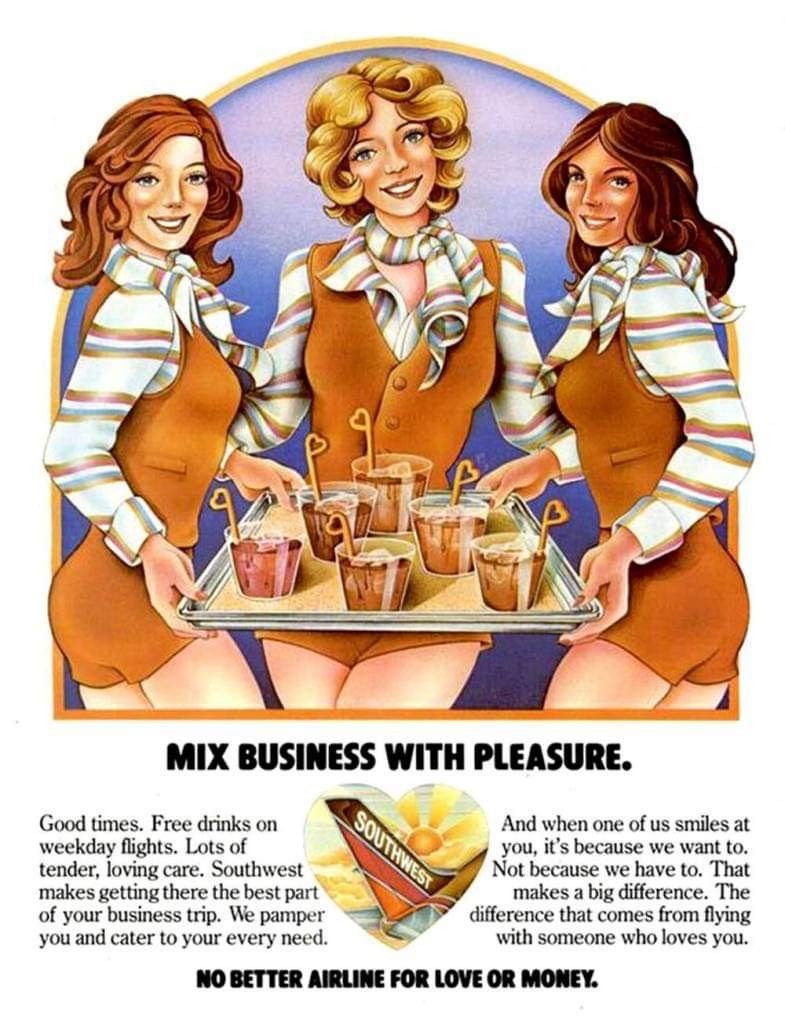 If there's one constant between the age of COVID and the mythical Golden Age of flying, it's that flight attendants have to deal with harassment on a daily basis. Nowadays, it's much more overtly hostile. But even in the Golden Age, it was there: rampant sexism that often rose to the level of sexual assault. And in both cases, it was caused by the massive economic pressures that come with such a volatile industry. In the 1960s, the average flight was only half full: all of that champagne and lobster might cause the well-heeled to flock to first class, but it didn't fill the tens of millions of empty seats in the back of the airplane. So airlines sought a competitive edge that everyone could appreciate. And they found it in their cabin crews. As long as there have been flight attendants, there have been overly friendly passengers, as one "air hostess" told The New York Times in 1936. "It's usually at the end of the run when we're off duty and the man is away from home and lonesome," she said. "If we like him we sometimes go to dinner and a show — if we aren't already going out with the pilot." But in the 1960s, airlines learned to weaponize this interest. They hired flight attendants with a specific "look": women no older than 27, weighing less than 135 pounds, between 5'2" and 5'7" in height, and "unencumbered" by a husband. And each airline hired for different personalities. Pan Am stewardesses were sophisticated and worldly. Braniff and Pacific Southwest, sexy and flirtatious. United wanted the "girl next door." A TV commercial for Eastern Air Lines dramatized the process — but only slightly — by having a Woody Allen sound-alike dismiss a parade of young women who weren't a fit: "She's awkward." "She's married." "She wears glasses. Honey, no." Even with such strict guidelines, airlines had a wealth of applicants. In 1961, Pan Am placed a recruiting ad in a London newspaper for flight attendants. A thousand women responded: the airline hired just 17, including Betty Riegel, who flew for eight years and wrote a book about her experiences. She can still remember the airline's grooming standards: hair above the collar, no necklaces or bracelets, eye shadow in regulation blue, and only one approved shade of lipstick — "Persian melon" by Revlon. "We were required to wear girdles," she added. "Every month, the supervisor would get the scales out to check we hadn't gone over our maximum weight." Above all else, flight attendants must always remain young and unattached. Anyone who got engaged or pregnant could be fired on the spot. And no matter what, your career was over as soon as you turned 32. Yet, every new hire at every airline had one trait in common, as Barron-Hess found out from a drunk HR executive one evening: across the entire industry, he told her, recruiters primarily looked for "tens who think they are sixes." 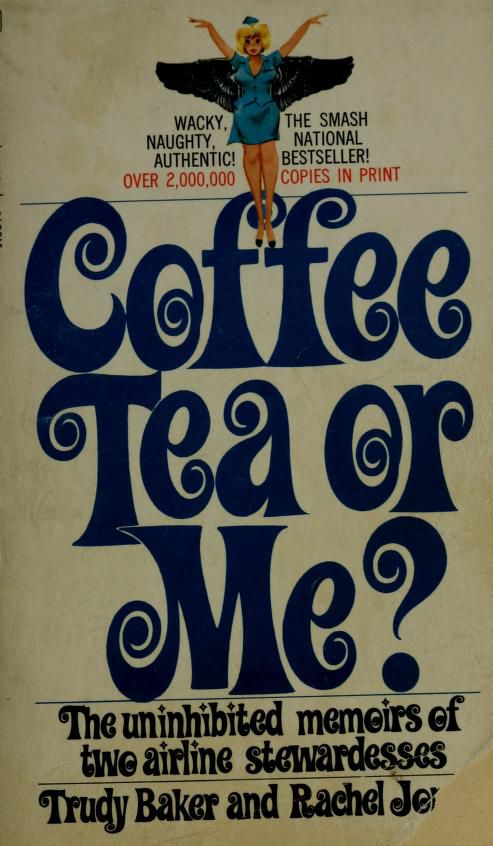 In 1967, the airlines' soft sell of their cabin crews turned harder. Two flight attendants named Trudy Baker and Rachel Jones published a book that purported to be "the uninhibited memoirs of two airline stewardesses." But mainly, it was positioned as a step-by-step guide to picking up flight attendants, who, the book assured readers, were ready and willing targets. "Good or bad, meeting men is the name of the stewardess game," wrote Baker and Jones. The book was a smash hit, selling 3 million copies and spawning three sequels — except Trudy Baker and Rachel Jones didn't exist. The book had actually been written by an American Airlines publicist named Donald Bain. Truthful or not, Coffee, Tea, or Me? planted the image of "stewardess sexpots" in the popular imagination, and airlines were quick to capitalize on it. Miniskirts and go-go boots became part of the standard uniform at Southwest Airlines. Braniff featured designer catsuits in psychedelic patterns. And Trans World Airlines made its flight attendants don disposable paper outfits in styles like "British wench," "Roman toga," or "Manhattan penthouse" just before meal service. No one was more on the nose than National Airlines and its 1971 "Fly Me" campaign. In one commercial, a bikini-clad flight attendant named Judy runs down the beach while she says in voice over, "Fly me to Houston. Or fly me to New Orleans. You can fly me morning, noon, and night. Just say when!" The campaign drove a 23 percent increase in passenger bookings. More than a few passengers took that image a little too seriously. In her 1974 memoir Sex Objects in the Sky, American Airlines flight attendant Paula Kane talked about the barrage of harassment that she had to endure in the wake of Coffee, Tea, or Me? — everything from "patting and pinching" to full-on sexual assault. One elderly passenger asked a colleague of Kane's to retrieve his coat from the overhead compartment for him. When she did, he shoved his hand up her skirt. When asked what the airline was doing to stop such handsy behavior, one supervisor replied, "They might get a pat, but the girls are moving so fast they scarcely have time to get pinched." Forty years later, the problem persists. A 2018 survey by the Association of Flight Attendants found that 68 percent of flight attendants have experienced sexual harassment at some point during their careers, and 1 in 5 have been physically assaulted on an airplane in the prior year. One passenger pulled a female flight attendant down into his lap and asked if she wanted to join the mile-high club. Another slapped a flight attendant on the buttocks as she bent over to get a can of pop out of the drinks cart for him. Others ask flight attendants where their "hottest layover" was or whether they "wanna come to my room and tie me up?" For their part, flight attendants try to brush it off as just part of the job. "You can tell that type of person," said Tracy. "The kind of guy that would want to hit on a flight attendant is the same guy who would hit on the bartender, the waitress, anyone in that serving role. Depending on the person, they can take it too far." But flight attendants who are the victims of sexual harassment also experience higher rates of depression, anxiety, and suicide. "We're at 36,000 feet with nowhere to go," a flight attendant named Teri told NPR in 2018. "So if something happens in the air, you're forced to deal with that until you're on the ground." If it happens at all. This past March, the Department of Transportation released a study on in-flight sexual assault, which found that "airlines generally do not contact law enforcement every time that they learn of an in-flight sexual misconduct incident." In that same report, the DOT asked the 12 largest US-based air carriers if they would be willing to revise their process for reporting in-flight harassment. "Most of them responded that they would not," it concluded. "I became a flight attendant because I wanted to travel," said Joe Thomas. "A lot of people say, oh, it's because I want to give good customer service. But I don't really believe that. I believe you become a flight attendant because you want to see the world." The job itself pays a wage that is right at the national median. But you get free flights in your off-time and discounted hotels, cruises, rental cars, and pretty much everything else related to hospitality. On the job, you have a flexible work schedule and freedom from much direct supervision. And you get to visit a different city every day just by going to work. Betty Riegel, who worked Pan Am's Pacific routes out of San Francisco in the 1960s, would often spend days-long layovers in places like Tahiti, Sydney, Manila, and even the occasional war zone. "We flew Vietnam out of San Francisco," she recalled, "and so we were landing in Saigon with the snipers' bullets flying all around us. And staying at altitude until the last minute, and coming down almost vertically." The flip side of it is missed holidays, family gatherings, and an unpredictable early career. It's not until flight attendants accrue seniority, which can take a year at a small airline, and five or more at the legacies, that they have control over when they work and where they go. And that still doesn't mean you're working on the same schedule as the rest of the world. "It's not your usual 9 to 5. It is completely a lifestyle you have to adapt to," said Tracy. "You really have to alter your entire existence, and if you hang on, the rewards on the tail end are worth it." That lifestyle is also a big reason why so many gay men turn to flying. In 2015, a London School of Economics study found that, proportionally speaking, there are more gay men working as flight attendants than there are working as hair stylists or nurses. Flying first became a refuge for gay men in the 1950s, according to Phil Tiemeyer, a historian of gender and sexuality at Kansas State University. For the entire decade, federal and state governments barred gay men and women from an increasing number of careers: the military, the civil service, and many professional jobs — teachers, doctors, lawyers, even bartenders. Airlines only hired a few hundred men as cabin crew in the 1950s (and virtually none between 1960 and 1971). But a huge proportion were gay — up to 90 percent, according to some former stewards. And they found, ironically, that the very policies that forced women out of the profession allowed gay men to stay in it. Male stewards didn't have to retire upon turning 32. Marriage restrictions didn't apply to male stewards at the time, and they obviously didn't get pregnant, either. So while female flight attendants stayed on the job for an average of 18 months, male flight attendants accrued experience and seniority that the constant influx of female new hires couldn't. So airlines tolerated gay men in the cabin, if only to keep their most senior stewards in place. And as airlines consolidated around major hubs — San Francisco, Los Angeles, Chicago, and New York — the pull toward aviation became even stronger. As Tiemeyer described it: "You can make decent money, you can work with other gay men, you don't have to worry about job security because the unions protect you and the companies decide to tolerate you, and you can go to all these exciting gay cities." It's a legacy that endures to this day. "I'm from a small town and always knew I wanted to get out and see the world," said Rich, a flight attendant who blogs as one half of twoguysonaplane.com. But it never seemed like he would get there. He was on food stamps, struggling to pay his rent every month. "A friend saw an ad for a flight attendant open house. They thought it would be the perfect summer job for me so I decided, why not?" It's been seven years since he took a chance on air travel. In that time, he met his husband, who's also a flight attendant, on a flight. Three years later, the two of them were married in an airplane hangar. They launched their travel blog together in Since 2017, they've blogged together at twoguysonaplane.com. "As gay men, we often struggle while growing up with being labeled and feeling trapped," he said. "Flying allows for a great deal of freedom to be exactly who you are, an opportunity which we don't always receive as members of the LGBTQ+ community. "Becoming a flight attendant didn't just change my life, it saved my life."  In times of crisis, though, the lifestyle can keep flight attendants chained to a job whose other benefits are disappearing before their very eyes. In 1978, President Carter signed the Airline Deregulation Act, which dissolved commercial aviation's regulated cartel and opened the industry to real competition for the first time in forty years. For consumers, this meant more flights and lower fares. By 1980, 134 new airlines were launched. Five years later, domestic capacity had increased by 50%, while the median ticket price had fallen by almost 25%. But it was a classic race to the bottom. That kind of lost revenue was unsustainable in an industry where profit margins rarely made it to double digits. By 1988, over 100 airlines had gone out of business. Even the legacy carriers that defined the Golden Age started to disappear: Braniff and National in 1982, Pan Am and Eastern in 1991. To survive, airlines cut costs to the bone. In 1980, a mid-career flight attendant working a normal schedule made about $4,200 in today's dollars. By 1995, a flight attendant with the same seniority and same hours would earn only $2,550 — a 40% decrease in pay for the same work. And all but two airlines terminated their pension plans, refusing to pay out more than $12 billion in retirement benefits. Wages and benefits weren't the only things that airlines did away with post-deregulation. "When airlines took away things that passengers took for granted — meals, blankets, pillows — it was always the flight attendants who were left to deliver the bad news," said aviation historian and former flight attendant Gailen David, who flew between 1988 and 2012. The clientele changed, too. With the rise of the modern frequent flyer program in the 1980s, a new generation of passengers — largely business travelers who had previously flown economy — now found their way into first class. It was a good way to reward flyers whose steady demand has always kept airlines afloat. But some of them had trouble acclimating to the new amenities, as Cecilia*, a flight attendant who worked first class in the 1980s, recalled. "Sir, may I offer you some hors d'oeuvres?" she asked one particular passenger at the start of service. He looked confused and pointed to the food cart. "What's that?" "Sir, we have goose liver paté, smoked salmon, shrimp cocktail, and caviar." "Caviar?" "Uh, it's roe," she said. Then, she clarified: "fish eggs, sir." He lit up. "Okay," he said, "give me two. Make 'em fried!"  None of aviation's past crises, however, compare to COVID-19. Not deregulation, not the 1973 oil crisis, not even September 11. To try and survive, airlines have cut schedules, retired older airplanes, and borrowed over $100 billion in loans and Federal aid. They've invested in electrostatic sprayers and medical-grade disinfectant, in a bid to make people comfortable with flying again. And they've deployed their flight attendants not only to enforce their patchwork mask rules, but also to try and recreate some semblance of the way things used to be, even behind layers of personal protective equipment. But most of all, they've looked to reduce the largest line-item on every airline's balance sheets: wages and benefits. "The potential for layoffs in the US aviation industry is staggering," said AFPA's Paul Hartshorn, Jr. "It's like nothing we've ever seen before." According to the Bureau of Labor Statistics, there were 121,900 flight attendants employed at the end of 2019. With the end of the Payroll Support Program in October, airlines furloughed more than 1 in 4 of them — 32,000 people over the course of three months. And there might have been even more furloughs if thousands more flight attendants, like Lori Lochelt and Joe Thomas, hadn't taken early retirement or unpaid leave. For Rich, the bad news arrived in mid-September. Over email, his airline informed him and hundreds of his colleagues that they would be furloughed. After he read it, he sat down on his staircase and cried. Two days before Christmas, Congress passed a $900 billion stimulus package that included $15 billion for airlines. They have already started to recall furloughed flight attendants, which is a condition of the stimulus package, but the process is slow. Rich has yet to receive his recall notice. Still, if his career has taught him anything, it's to adjust to the circumstances, no matter what they might be. He plans to come back to flying when the jobs come back. Besides, he can't imagine going back into the "real world." Even so, a recall won't be permanent. Federal payroll aid is scheduled to last for four months, and most airlines have characterized the recalls as "temporary employment" only. Come April, those 32,000 might find themselves out of work once again. And the rollout of vaccinations worldwide won't restore air travel by then. Although airline executives like to claim that they're seeing a "slow and steady build in demand" or that they're positioned to "lead the rebound," the reality is that airline revenues are down between 70% and 80% compared to 2019, and may not reach pre-pandemic levels for two or more years. That's just not fast enough to guarantee jobs for every flight attendant once the stimulus package expires. So more than a few of them are looking toward a future that may not involve flying any more. Jennifer "Jaki" Johnson, who's been flying for six years, sees long-term changes coming to commercial aviation, even after the pandemic subsides. "All of these different options to have virtual conferences and meetings [will] change the face of business travel, which a lot of airlines depend on," she said. "Airlines will have to become leaner, smaller. Travel might look so different in the future that we don't need as many flight attendants as before." She hasn't flown since March, and now focuses on her own wellness product line, Jetsetter Chic, which just launched pandemic amenity kits — complete with hand sanitizer and masks. Her advice to other flight attendants is blunt, but hopeful. "Rethink a career in aviation. Look at what else you can do, because there are so many new paths going to open with technology." *Name has been changed to protect the identity of those involved. |
| Winter Storm Washes Away Sand At Rockaway Beach - Yahoo News Posted: 03 Feb 2021 10:01 AM PST  The Week Biden's team is reportedly surprised Republicans don't see the political upsides of backing a big COVID-19 billThe politics of COVID-19 spending legislation is complicated. President Biden and former President Donald Trump, who don't agree on much, both pushed to get $2,000 direct payments to most Americans this winter, and the Republican governor of West Virginia is backing Biden's $1.9 trillion COVID-19 relief package while his state's Democratic senator, Joe Manchin, favors a smaller package. The White House is privately meeting with a group of Senate Republicans who proposed a $618 billion alternative package, The Associated Press reports, even as Biden and Treasury Secretary Janet Yellen reject that amount as insufficient and urge Democrats to go big and go quickly. Biden and his advisers "publicly tout the virtues of bipartisan collaboration," but "they aren't pollyannaish about it," Sam Stein reports at Politico. "They know there is no recent history to suggest any such collaboration is coming.," but "inside the White House there is still some surprise that Republicans currently aren't more interested in working with them on COVID relief. Not because they believe Republicans philosophically support the bill, but because there are clear political incentives for them to do so." Biden and his aides have noted repeatedly that just because the budget reconciliation process would allow Democrats to pass much of the $1.9 trillion package without Republican support, Republicans can still vote for the package. If Democrats go the budget reconciliation route, the 10 Senate Republicans can either "oppose the measure without being able to stop it or work to shape it, pledge to vote for it, and get credit for the goodies inside it," Stein reports. "Put another way: Republicans could vote for a bill that includes billions of dollars of help for states, massive amounts of cash for vaccine distribution, and $1,400 stimulus check for most Americans. Or they could oppose it on grounds that the price tag is too steep, or the minimum wage hike is too high, or the process too rushed." And if they do that, a senior administration official told Stein, "they'll get no credit" for those $1,400 checks. Democrats only have the party-line option because they unexpectedly won both Senate seats in a Georgia runoff election, Stein notes, and one political "lesson from that episode is, quite bluntly: It's better to be on the side of giving people money." Trump understood that. Time will tell what Senate Republicans will decide. More stories from theweek.comStephen Bannon, pardoned by Trump, may now be charged over the same scheme in New YorkDemocrats may only have one chance to stop America from becoming a one-party stateMarjorie Taylor Greene is getting exactly what she wants |
| Wanted Miami Beach Shooting Suspect Had Been Arrested In NY - Yahoo News Posted: 03 Feb 2021 09:30 AM PST  The Telegraph What Russia's Sputnik V vaccine means for the UKThis was first published in The Telegraph's Refresher newsletter. For more facts and explanation behind the week's biggest political stories, sign up to the Refresher here – straight to your inbox every Wednesday afternoon for free. What's the story? It was the race the Kremlin was desperate to win. The global effort to find and develop an effective vaccine for the coronavirus was not just a matter of life and death for the countries that took part: it was a matter of national pride. Yesterday interim trial data showed that the Russian vaccine, known as Sputnik V, is almost 92 per cent effective against symptomatic Covid after two doses, bringing it in line with many of the jabs that have been developed in the West. Phase three trials reported by the Gamaleya National Research Centre, which developed the vaccine in Moscow, show little or no side effects in 20,000 participants. The Russian vaccine works in a similar way to the Oxford/AstraZeneca jab: by placing the genetic material of Covid-19 into a harmless adenovirus, then injecting it into the patient. So-called "viral vector" vaccines are easier to store and cheaper to produce – making them more convenient than "spike protein" jabs, like the Pfizer and Moderna offerings. For the Russian government, the apparent safety of the Sputnik vaccine represents not just a national and public health victory but a relief, since authorities began distributing the vaccine before the results of the trials. More than 1.5 million people, including the Telegraph's Moscow Correspondent Nataliya Vasilyeva, have already received it. That gamble appears to have paid off. Ian Jones, professor at the University of Reading, and Polly Roy, professor at the London School of Hygiene & Tropical Medicine, yesterday pointed out that the jab's development "has been criticised for unseemly haste, corner cutting, and an absence of transparency". "But the outcome reported here is clear and the scientific principle of vaccination is demonstrated," they said. "Another vaccine can now join the fight to reduce the incidence of Covid-19." Others are more circumspect. Boris Johnson, the Prime Minister, has been reluctant to address the news about Sputnik V, despite his enthusiastic support for Pfizer/BioNTech, Moderna and Oxford/AstraZeneca. In a briefing with reporters yesterday, the Prime Minister's spokesman insisted any comment on vaccines was a matter for scientists, not Downing Street. Asked why Mr Johnson had not yet welcomed the news, the spokesman would not comment further. Mr Johnson's reluctance to welcome the news was shared by his Cabinet, who made no mention of the vaccine all day. Looking back That could be explained by the fact that the news follows months of anxiety about the UK's own vaccine rollout, which began with the first NHS jab in December. Russia's first dose, meanwhile, was injected in August. Vladimir Putin, the President, announced on television that his daughter was one of the first to receive it. The Russians have not been shy about treating the development of the jab as a competition, either. The product's name is a reference to Sputnik 1, the first artificial satellite to be launched from Earth. That satellite was launched by the Soviet Union in 1957, and marked both a major turning point in the space race and bitter defeat for the United States. For UK politicians, who pride themselves on their "world-beating" international comparisons, Russia's vaccine success is problematic, while the timing of the announcement could not have been worse. Hours later, Dominic Raab, the Foreign Secretary, issued a statement condemning the Russian courts for their imprisonment of Alexei Navalny, an opposition politician who returned to the country following a near-miss poisoning with a toxic nerve agent, thought to have been carried out by Russian intelligence services. Anything else? All that could mean the UK is unlikely to want to cooperate with Russia on the rollout of its jab – but Russian scientists have already suggested a partnership with Britain. Kirill Dmitriev, chief executive of the group that funded Sputnik V and a close ally of Mr Putin, said combining a shot of his vaccine with one of the AstraZeneca jab could "actually work better because immunity gets stronger". "This idea, called heterogeneous boosting, is at the core of the Sputnik vaccine because we use two different shots and we believe this is the best way to fight with mutations and this also fosters a partnership between different vaccine manufacturers," he told the BBC. The proposal presents ministers with an interesting diplomatic question, as well as potential concerns about vaccine efficacy and logistics. Mixing supplies of Sputnik and AstraZeneca would mean unprecedented co-operation between public health bodies between the two countries. Before coronavirus, the last major incident Public Health England dealt with was the poisoning of Sergei Skripal in Salisbury by Russian GRU agents, which marked a significant cooling of relations. Elsewhere, both countries also want to use vaccines as a diplomatic tool overseas. With supplies running short and almost all manufacturers based in richer countries, inoculations could become a major source of soft power for the states that have funded their development – including both the UK and Russia. Matt Hancock, the Health Secretary, has already announced the UK will use its war chest of more than 400 million vaccines to help poorer countries around the world once Britons have been protected. Russia, meanwhile, has taken tens of millions of orders from Egypt, Nepal, Brazil, Mexico and Argentina for Sputnik. Both will likely use vaccines to strengthen their influence in regions of diplomatic interest, as well as through politically neutral schemes like the WHO's Covax. The Refresher take The development of any new vaccine is a boon for the global fight against coronavirus because the disease will not be brought under control until it has been tackled everywhere. But the apparent success of the Sputnik V jab presents Russia's Western rivals with an interesting dilemma: to embrace and support Mr Putin's vaccine and consider combining it with their own, or to continue to ignore it. Mr Johnson's current strategy, to continue to talk up Britain's successes while jealously guarding its supplies for the first-phase rollout, will come to an end when all UK adults have received their doses. What he and others do next about Sputnik V could mark a major shift in Russia's relationship with the West and in the course of the pandemic. |
| Florida Gov. Ron DeSantis announces new COVID-19 vaccination site in Pahokee - Yahoo News Posted: 03 Feb 2021 10:03 AM PST  The Telegraph What Russia's Sputnik V vaccine means for the UKThis was first published in The Telegraph's Refresher newsletter. For more facts and explanation behind the week's biggest political stories, sign up to the Refresher here – straight to your inbox every Wednesday afternoon for free. What's the story? It was the race the Kremlin was desperate to win. The global effort to find and develop an effective vaccine for the coronavirus was not just a matter of life and death for the countries that took part: it was a matter of national pride. Yesterday interim trial data showed that the Russian vaccine, known as Sputnik V, is almost 92 per cent effective against symptomatic Covid after two doses, bringing it in line with many of the jabs that have been developed in the West. Phase three trials reported by the Gamaleya National Research Centre, which developed the vaccine in Moscow, show little or no side effects in 20,000 participants. The Russian vaccine works in a similar way to the Oxford/AstraZeneca jab: by placing the genetic material of Covid-19 into a harmless adenovirus, then injecting it into the patient. So-called "viral vector" vaccines are easier to store and cheaper to produce – making them more convenient than "spike protein" jabs, like the Pfizer and Moderna offerings. For the Russian government, the apparent safety of the Sputnik vaccine represents not just a national and public health victory but a relief, since authorities began distributing the vaccine before the results of the trials. More than 1.5 million people, including the Telegraph's Moscow Correspondent Nataliya Vasilyeva, have already received it. That gamble appears to have paid off. Ian Jones, professor at the University of Reading, and Polly Roy, professor at the London School of Hygiene & Tropical Medicine, yesterday pointed out that the jab's development "has been criticised for unseemly haste, corner cutting, and an absence of transparency". "But the outcome reported here is clear and the scientific principle of vaccination is demonstrated," they said. "Another vaccine can now join the fight to reduce the incidence of Covid-19." Others are more circumspect. Boris Johnson, the Prime Minister, has been reluctant to address the news about Sputnik V, despite his enthusiastic support for Pfizer/BioNTech, Moderna and Oxford/AstraZeneca. In a briefing with reporters yesterday, the Prime Minister's spokesman insisted any comment on vaccines was a matter for scientists, not Downing Street. Asked why Mr Johnson had not yet welcomed the news, the spokesman would not comment further. Mr Johnson's reluctance to welcome the news was shared by his Cabinet, who made no mention of the vaccine all day. Looking back That could be explained by the fact that the news follows months of anxiety about the UK's own vaccine rollout, which began with the first NHS jab in December. Russia's first dose, meanwhile, was injected in August. Vladimir Putin, the President, announced on television that his daughter was one of the first to receive it. The Russians have not been shy about treating the development of the jab as a competition, either. The product's name is a reference to Sputnik 1, the first artificial satellite to be launched from Earth. That satellite was launched by the Soviet Union in 1957, and marked both a major turning point in the space race and bitter defeat for the United States. For UK politicians, who pride themselves on their "world-beating" international comparisons, Russia's vaccine success is problematic, while the timing of the announcement could not have been worse. Hours later, Dominic Raab, the Foreign Secretary, issued a statement condemning the Russian courts for their imprisonment of Alexei Navalny, an opposition politician who returned to the country following a near-miss poisoning with a toxic nerve agent, thought to have been carried out by Russian intelligence services. Anything else? All that could mean the UK is unlikely to want to cooperate with Russia on the rollout of its jab – but Russian scientists have already suggested a partnership with Britain. Kirill Dmitriev, chief executive of the group that funded Sputnik V and a close ally of Mr Putin, said combining a shot of his vaccine with one of the AstraZeneca jab could "actually work better because immunity gets stronger". "This idea, called heterogeneous boosting, is at the core of the Sputnik vaccine because we use two different shots and we believe this is the best way to fight with mutations and this also fosters a partnership between different vaccine manufacturers," he told the BBC. The proposal presents ministers with an interesting diplomatic question, as well as potential concerns about vaccine efficacy and logistics. Mixing supplies of Sputnik and AstraZeneca would mean unprecedented co-operation between public health bodies between the two countries. Before coronavirus, the last major incident Public Health England dealt with was the poisoning of Sergei Skripal in Salisbury by Russian GRU agents, which marked a significant cooling of relations. Elsewhere, both countries also want to use vaccines as a diplomatic tool overseas. With supplies running short and almost all manufacturers based in richer countries, inoculations could become a major source of soft power for the states that have funded their development – including both the UK and Russia. Matt Hancock, the Health Secretary, has already announced the UK will use its war chest of more than 400 million vaccines to help poorer countries around the world once Britons have been protected. Russia, meanwhile, has taken tens of millions of orders from Egypt, Nepal, Brazil, Mexico and Argentina for Sputnik. Both will likely use vaccines to strengthen their influence in regions of diplomatic interest, as well as through politically neutral schemes like the WHO's Covax. The Refresher take The development of any new vaccine is a boon for the global fight against coronavirus because the disease will not be brought under control until it has been tackled everywhere. But the apparent success of the Sputnik V jab presents Russia's Western rivals with an interesting dilemma: to embrace and support Mr Putin's vaccine and consider combining it with their own, or to continue to ignore it. Mr Johnson's current strategy, to continue to talk up Britain's successes while jealously guarding its supplies for the first-phase rollout, will come to an end when all UK adults have received their doses. What he and others do next about Sputnik V could mark a major shift in Russia's relationship with the West and in the course of the pandemic. |
| Spoiler alert! Upcoming TV soap storylines - Yahoo Lifestyle UK Posted: 03 Feb 2021 09:44 AM PST The Telegraph Great British Getaways: 10 summer breaks in Devon to book now (before they sell out)'We're desperate for something to look forward to', reads the email from a London couple, as they book my Dartmoor holiday let, Moorland View, for a break this summer. It's a sentiment echoed by dozens of holidaymakers, who in four days of frenzied reservations recently, booked up the cottage for almost the entire season. Devon's holiday accommodation agents report a similar surge, including Toad Hall Cottages, who saw a record 1,000 bookings in seven days. If you've been reticent about booking a getaway, it's not too late. Although established hotels and holiday homes have limited summer availability, new properties, cottages in lesser-known locations and city hotels still offer plenty of choice. Here's our round-up of best, including luxury coastal retreats, dog-friendly hotels and wildlife tours. For more ideas, keep an eye on tour operators' social media feeds – it's where many post last-minute availability and deals. 1. Stay in a new waterside hotel, Salcombe If you're quick-off-the-draw, you'll have top pick of dates at this new luxury hotel on South Sands beach in Salcombe, which opens the books for its summer launch on Friday (February 5). Owned by Harbour Hotels, it promises 50 stylish rooms and suites, many with sea views, a spa, beach bar and laid-back restaurant. Doubles start at £340 per night, including breakfast (01202 400614; www.harbourhotels.co.uk/harbour-beach-club). |
| You are subscribed to email updates from "labor-day-travel-deals-2018,beach-holiday-deals" - Google News. To stop receiving these emails, you may unsubscribe now. | Email delivery powered by Google |
| Google, 1600 Amphitheatre Parkway, Mountain View, CA 94043, United States | |


Comments
Post a Comment